
Walthamstow Market
Street Food Hospitality
This project critically examines the management challenges faced by street food vendors operating in Walthamstow Market, one of the longest street markets in Europe.
The market represents a historically significant local trading space that supports small independent businesses while serving a diverse urban population. However, vendors operate in a highly competitive and price-sensitive environment, where rising costs, labour shortages, and fluctuating demand create ongoing operational challenges.
This analysis applies hospitality management concepts to evaluate these issues and proposes practical solutions for vendors, market authorities, and local government stakeholders.

MARKET CONTEXT:

Walthamstow Market is one of the longest outdoor street markets in Europe and plays a central role in the local economy of East London. The market is characterised by a high number of independent traders and a strong reliance on local customers rather than international tourists.
According to London Borough of Waltham Forest, the market supports small businesses, local employment, and community activity. However, the same report highlights that local high streets and markets are increasingly affected by changing consumer spending patterns and economic pressure.
This means that, although footfall remains relatively high, customer spending is more limited and price-sensitive. As a result, street food vendors operate in an environment where maintaining sales volume is possible, but increasing profitability is significantly more difficult.
In addition, the diversity of the local population influences both the type of food offered and the expectations of customers, creating a dynamic but complex operating environment for vendors.
SERVICE CHARACTERISTICS:

Street food vendors in Walthamstow Market operate in a fast-paced environment where food is prepared and served immediately in front of customers. This means service quality depends heavily on speed, coordination, and staff performance.
According to London Borough of Waltham Forest, local markets experience high footfall during peak trading periods, particularly on weekends and busy hours. This creates operational pressure on vendors to manage demand efficiently within limited space.
During these peak periods, vendors must handle multiple tasks at the same time, including order-taking, food preparation, and payment processing. As demand increases, even small delays can quickly lead to longer queues and slower service.
In addition, reports from Office for National Statistics highlight that customer expectations for speed and convenience in food services have increased, particularly with the growth of fast-service formats.
As a result, maintaining consistent service quality becomes difficult, especially when staff numbers and physical space are limited.
Competition:

Competition in Walthamstow Market is mainly direct and price-based, as multiple street food vendors offer similar low-cost products within a small area. This creates a highly competitive environment where customers make quick decisions based on price, portion size, and waiting time.
In addition to internal competition between market traders, vendors also face external competition from nearby fast-food outlets and takeaway businesses such as McDonald’s and other independent shops in the Walthamstow area.
According to London Borough of Waltham Forest, local markets and high streets are experiencing increased competition from both informal street trading and established food chains, which directly affects the performance of small independent vendors.
Furthermore, data from Statista shows continued growth in the UK fast-food and takeaway sector, increasing pressure on smaller food businesses that operate with limited resources.
As a result, vendors in Walthamstow Market are often forced into a low-margin, high-volume model, where maintaining profitability becomes difficult despite high levels of customer activity.
COST:

Street food vendors in Walthamstow Market are facing increasing cost pressures, particularly in relation to food ingredients, energy, and daily operating expenses.
According to Office for National Statistics, food prices in the UK have risen significantly in recent years due to inflation and supply chain disruptions. This has had a direct impact on small food businesses, increasing the cost of raw materials.
At the same time, vendors in Walthamstow Market operate in a price-sensitive environment where customers expect affordable food. This limits the ability of businesses to pass increased costs onto customers through higher prices.
In addition, local authority reports from London Borough of Waltham Forest highlight ongoing financial pressure on small traders, particularly those operating in local markets.
This creates a gap between rising costs and limited pricing power, reducing profit margins and making it difficult for vendors to invest in business improvements or long-term growth.
LABOUR CHALLENGE:
Labour is a key operational challenge for street food vendors in Walthamstow Market, as most businesses operate with small teams and limited staff.
For example, independent vendors such as Deeney’s rely on a small number of employees to manage all daily activities, including food preparation, customer service, and payments. This creates operational risk, as any staff shortage or absence directly affects service speed and quality. According to UKHospitality, the hospitality sector in the UK is facing ongoing labour shortages, with many small businesses struggling to recruit and retain workers. In addition, labour challenges are closely linked to workforce mobility. The UK hospitality industry depends heavily on migrant workers, and changes in migration patterns have affected labour availability. Data from Office for National Statistics highlights the importance of migration in supporting service sector employment. As a result, vendors in Walthamstow Market face increased pressure on existing staff, particularly during busy periods, which can reduce service efficiency and customer satisfaction.

DEMAND:

Demand in Walthamstow Market is largely driven by local footfall and daily activity rather than consistent tourist demand. This makes it more variable and less predictable compared to central London markets.
According to London Borough of Waltham Forest, the market experiences peak footfall during weekends and busy trading hours, while quieter periods see a significant drop in customer numbers.
This variation creates operational challenges for vendors, as they must prepare for high demand without knowing exactly how many customers will arrive. Over-preparation can lead to waste, while under-preparation can result in lost sales.
In addition, wider economic conditions also affect demand. Reports from Office for National Statistics indicate that rising living costs have reduced discretionary spending, meaning customers are more cautious about how much they spend on street food.
As a result, vendors must operate in an environment where demand fluctuates daily, making revenue less stable and harder to predict.
MOBILITY:
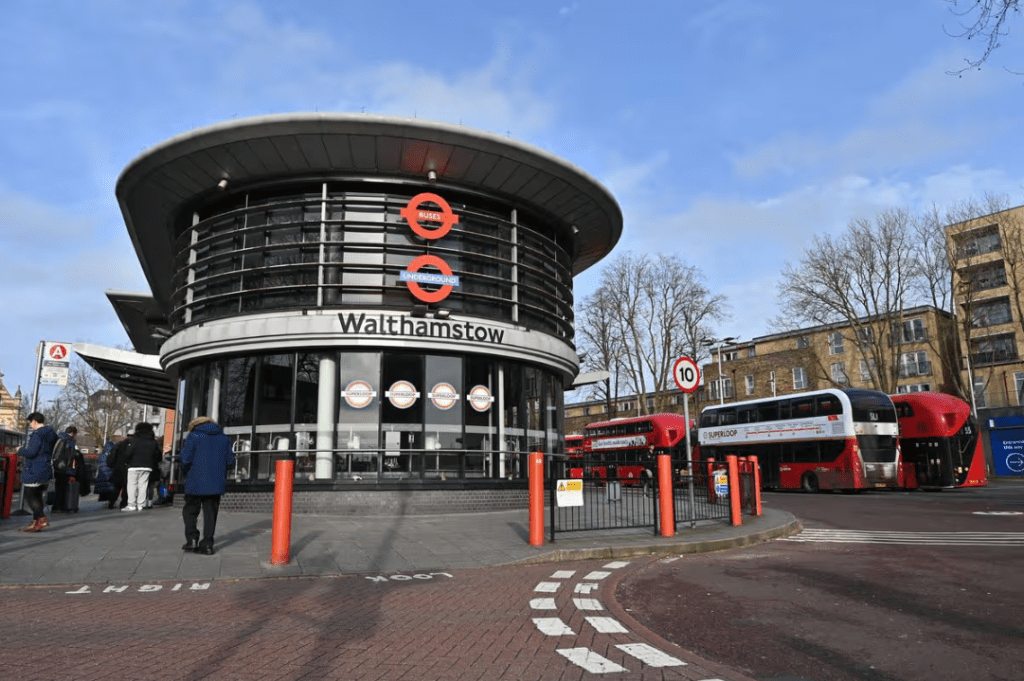
Mobility plays a key role in shaping both customer demand and the workforce in Walthamstow Market.
Unlike central London markets, Walthamstow Market is mainly influenced by local mobility, including residents, commuters, and daily visitors moving within the area. This means customer flow depends on patterns such as working hours, commuting routes, and local activity.
According to Office for National Statistics, London experiences high levels of daily internal movement, with large numbers of people commuting across the city. This movement directly affects footfall in local markets such as Walthamstow.
In terms of workforce, the hospitality sector in London relies heavily on migrant labour. Data from Office for National Statistics shows that a significant proportion of workers in the service sector come from international backgrounds.
This creates both opportunities and challenges. On one hand, it supports business operations by providing labour. On the other hand, changes in migration patterns and labour availability can create staffing shortages.
As a result, mobility affects not only customer demand but also the ability of vendors to maintain stable operations.
SUPPLY CHAIN:
Street food vendors in Walthamstow Market depend heavily on a consistent supply of fresh and affordable ingredients to maintain daily operations.
However, supply chains in the UK food sector have become increasingly unstable. According to Office for National Statistics, fluctuations in food prices and supply disruptions have affected small businesses across the country.
For vendors, this creates uncertainty in both cost and availability. Ingredients may become more expensive or difficult to source, forcing businesses to either increase prices or reduce portion sizes and quality.
In addition, small vendors often rely on a limited number of suppliers, which increases risk. If a supplier fails to deliver on time, the vendor may not be able to operate fully for that day.
As a result, supply chain issues directly affect product consistency, pricing decisions, and overall business reliability.
Technology:

Technology plays an increasingly important role in improving efficiency and customer experience in street food operations.
In Walthamstow Market, some vendors have adopted digital tools such as contactless payments and mobile ordering, while others still rely on cash-based and manual systems.
According to Statista, the use of contactless payments in the UK has increased significantly in recent years, with customers expecting fast and convenient payment options.
Vendors who do not adopt these technologies may experience slower service and longer queues, which can lead to customer dissatisfaction and lost sales.
In addition, limited use of digital marketing, such as social media, reduces visibility and customer engagement, especially among younger consumers.
As a result, technology adoption is no longer optional but necessary for maintaining competitiveness in a fast-paced market environment.
SOLUTIONS:
Addressing the challenges faced by street food vendors in Walthamstow Market requires practical and coordinated action at both business and market level.
At the vendor level, improving operational efficiency is essential. Vendors can reduce waiting times and manage peak demand more effectively by simplifying their menus and focusing on high-demand items. Preparing ingredients in advance and organising workflow more efficiently allows businesses to serve more customers without increasing staff costs, directly addressing labour and service challenges.
To respond to intense price-based competition, vendors should move away from competing only on price and instead focus on product differentiation. Offering unique or specialised menu items can help attract repeat customers and reduce direct competition with nearby vendors and fast-food chains.
Cost pressures can be managed by reducing waste and improving stock control. By purchasing ingredients more strategically and limiting menu complexity, vendors can lower operating costs while maintaining consistent quality.
At the market level, support from London Borough of Waltham Forest is important. Investment in better infrastructure, such as improved stall layouts and shared facilities, can help vendors operate more efficiently. In addition, providing training programmes for small businesses, particularly in digital payments and customer service, can improve overall market performance.
To address demand fluctuations, local authorities can promote the market through community events and local campaigns, helping to increase consistent footfall rather than relying only on peak periods.
Overall, these solutions focus on practical improvements that directly respond to the real challenges faced by vendors, while also supporting the long-term sustainability of the market.
CONCLUSION:
Street food vendors in Walthamstow Market operate in a challenging environment where high levels of activity do not always result in strong financial performance.
The analysis shows that vendors face interconnected challenges, including intense price-based competition, rising operational costs, labour shortages, and unpredictable demand. In addition, factors such as local mobility patterns and supply chain disruptions further increase uncertainty in daily operations.
These challenges highlight the difficulty of maintaining profitability in a market that is both highly competitive and price-sensitive.
However, the findings also demonstrate that practical improvements in efficiency, service delivery, and product differentiation can significantly enhance business performance. At the same time, support from London Borough of Waltham Forest is essential in creating a more stable and sustainable trading environment.
Overall, long-term success in Walthamstow Market depends on the ability of vendors to adapt to changing conditions while improving operational efficiency and customer experience.
REFERENCE:
Busulwa, R., Pickering, M. and Mao, I. (2022) ‘Digital transformation and hospitality management competencies: Toward an integrative framework’, International Journal of Hospitality Management, 102, p. 103132.
Higgins-Desbiolles, F. and Bigby, B. (2022) ‘A local turn in tourism studies’, Annals of Tourism Research, 92, p. 103291.
Ivanov, D. (2020) ‘Supply chain resilience: a systematic review and future research directions’, International Journal of Production Research, 58(10), pp. 2904–2926.
Kotler, P., Bowen, J. and Makens, J. (2017) Marketing for Hospitality and Tourism. 7th edn. Harlow: Pearson.
London Borough of Waltham Forest (2023) High street and market development reports. Available at: https://www.walthamforest.gov.uk (Accessed: 3 April 2026).
Lovelock, C. and Wirtz, J. (2016) Services Marketing: People, Technology, Strategy. 8th edn. Harlow: Pearson.
Lugosi, P. and Ndiuini, A. (2022) ‘Migrant mobility and value creation in hospitality labour’, Annals of Tourism Research, 95, p. 103429.
Morrison, A. (2018) Small Business Management in Hospitality, Tourism and Events. London: Routledge.
Office for National Statistics (2024) Consumer price inflation, UK. Available at: https://www.ons.gov.uk (Accessed: 3 April 2026).
Office for National Statistics (2024) Consumer trends, UK. Available at: https://www.ons.gov.uk (Accessed: 3 April 2026).
Office for National Statistics (2024) Migration statistics quarterly report. Available at: https://www.ons.gov.uk (Accessed: 3 April 2026).
Porter, M.E. (2008) ‘The five competitive forces that shape strategy’, Harvard Business Review, 86(1), pp. 78–93.
Statista (2024) Fast food market revenue in the United Kingdom. Available at: https://www.statista.com (Accessed: 3 April 2026).
Statista (2024) Contactless payment usage in the UK. Available at: https://www.statista.com (Accessed: 3 April 2026).
UKHospitality (2023) Workforce and labour shortage report. Available at: https://www.ukhospitality.org.uk (Accessed: 3 April 2026).